Understanding measurements is essential for daily tasks, whether you are working on a home improvement project, buying a new tablet, or simply trying to visualize physical dimensions. A common question that frequently arises is: how big is 10 inches? To provide a precise answer, 10 inches is exactly 25.4 centimeters or 0.254 meters. This measurement serves as a critical bridge between the imperial and metric systems, and knowing how to convert it accurately is a useful skill.
MeasurementsAugust 23, 2026
How Big Is 10 Inches? 25.4 Centimeters Explained
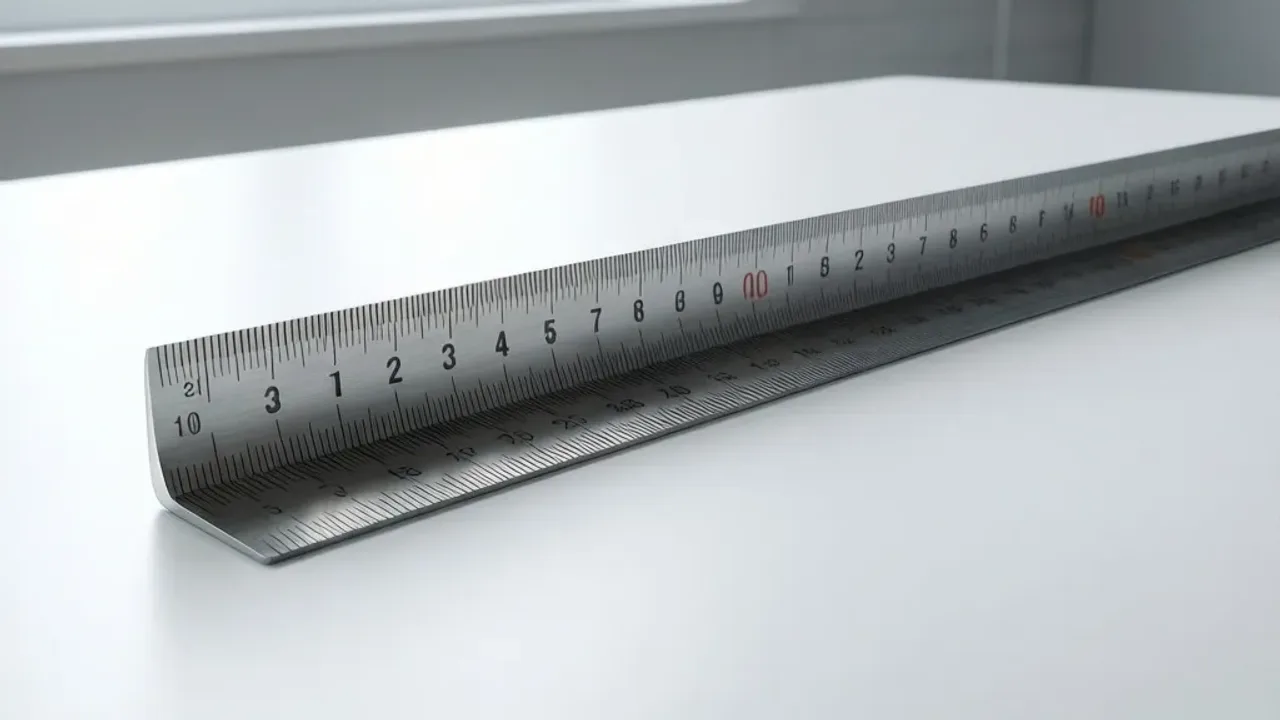 AI-generated image
Key Takeaways:
- Ten inches is exactly equivalent to 25.4 centimeters or 0.254 meters.
- This length is slightly more than the width of standard American letter-sized paper (8.5 inches).
- Conversion to millimeters is simple; you multiply the inch value by 25.4.
- Understanding this size assists in accurately measuring household components and electronic displays.
Visualizing 10 Inches
Visualizing a 10-inch length is easiest when compared to everyday objects. Most people are familiar with standard office supplies, which act as excellent benchmarks for length and width. A standard sheet of American letter-sized paper measures 8.5 inches in width. Therefore, a 10-inch span extends exactly 1.5 inches beyond the edge of that paper. This provides a tangible way to grasp the distance without needing a specialized tool.
This scale is also frequently used for modern consumer electronics. Many tablet screens are measured diagonally, and a 10-inch display is a very popular category. When a person asks how big is 10 inches, visualizing the diagonal span of a tablet is one of the most common ways to relate to this specific dimension. It is quite intuitive once you have a reference in front of you.
Beyond electronics, 10 inches is a frequent measurement in construction and furniture design. Drawer slides, cabinet hardware, and small shelving units often utilize this dimension. By identifying these common benchmarks, you can quickly estimate distances in your environment.
| Unit System | Equivalent Value for 10 Inches |
|---|---|
| Inches | 10 inches |
| Centimeters | 25.4 cm |
| Meters | 0.254 m |
| Millimeters | 254 mm |
The Importance of Precision
Precision is vital when dealing with measurements. Whether you are cutting material for a project or checking if a piece of furniture will fit into a specific space, knowing the exact conversion is necessary. The inch is defined as exactly 25.4 millimeters. Because this is a fixed international standard, there is no ambiguity when converting between the systems.
Many people struggle with the mental math required to convert imperial units to metric units. However, because the conversion factor is a clean 25.4, the process is streamlined. If you need to convert 10 inches, you are simply shifting the decimal point. This reliability ensures that whether you are in an engineering lab or a home workshop, the results remain consistent.
Measurement errors can be costly. They lead to wasted materials and time. Always double-check your readings. Small mistakes add up fast.
Common Objects and Measurements
When working with this measurement, keep these items in mind to help gauge the size accurately:
- The width of a standard American letter-sized paper is 8.5 inches.
- A 10-inch length is roughly equal to the height of a standard professional document.
- Many tablet devices are measured diagonally at 10 inches.
- The average length of a standard dinner plate often falls near this size range.
Practical Measurement Tips
Follow these steps to ensure accuracy when measuring items of this length:
- Tool Selection: Use a high-quality ruler or tape measure.
- Alignment: Align your measuring tool starting exactly at the zero mark.
- Verification: Verify that you are using the correct side of the ruler. Metric and imperial sides look similar but are very different.
- Conversion: Convert your final measurement to centimeters if needed for international comparisons.
Accuracy matters. Always check your tools.
Understanding Imperial and Metric Systems
The global community primarily uses two systems of measurement: the Imperial system and the International System of Units (SI), commonly known as the metric system. The United States remains one of the few countries that primarily utilizes the imperial system for everyday measurements, such as inches, feet, and miles. However, the metric system is the global standard for science and international commerce.
Because these two systems coexist, understanding the conversion between them is a basic necessity for modern life. When someone asks how big is 10 inches, they are essentially bridging this gap. By mastering the conversion factor of 25.4, you effectively become bilingual in the language of measurement.
This knowledge is particularly helpful when purchasing goods online. Many products are listed with metric dimensions, while consumers in the United States may be more accustomed to inches. Being able to visualize the size quickly helps prevent disappointment when a product arrives.
Frequently Asked Questions
How do I convert 10 inches to centimeters?
To convert 10 inches to centimeters, you multiply the inches by 2.54. This simple calculation results in exactly 25.4 centimeters.
Is 10 inches the same as a foot?
No, 10 inches is not the same as a foot. A foot is 12 inches long, meaning 10 inches is exactly two inches shorter than one foot.
How many meters are in 10 inches?
There are 0.254 meters in 10 inches. You reach this figure by dividing 25.4 centimeters by 100.
What is 10 inches in millimeters?
10 inches is equal to 254 millimeters. Multiplying by 10 provides this precise measurement, as each inch contains 25.4 millimeters.
Why is 10 inches a common measurement for screens?
The 10-inch size is a standard for portable electronics. It balances screen area and device portability well, making it a favorite for tablets.
Are there tools to help with these conversions?
Yes, many digital calculators and conversion apps exist to assist with these tasks. However, memorizing the 2.54 factor is the fastest way to compute it manually.
In summary, knowing the exact value of 10 inches allows for easier conversion between imperial and metric units in both professional and personal settings. Always use a standard, calibrated ruler to ensure maximum precision when verifying this length for your specific projects.
Share: