Understanding the scale of specific distances is essential for various professional and personal tasks. When someone asks, "how big is 100 meters," the direct answer is that it equals 328.08 feet or approximately 109.36 yards. This length serves as a fundamental benchmark in the International System of Units, providing a reliable constant for engineers, athletes, and planners alike. By breaking down this distance into more familiar units, we can visualize the scale of 100 meters more effectively.
MeasurementsOctober 4, 2026
How Big Is 100 Meters? 328.08 Feet Explained
 AI-generated image
Key Takeaways:
- One hundred meters is equivalent to 328.08 feet or 109.36 yards.
- The meter is defined by the distance light travels in a vacuum over a specific time.
- Walking 100 meters typically takes between 60 and 90 seconds.
- This distance is slightly longer than an American football field, which measures 100 yards.
Visualizing 100 Meters
Visualizing large distances often requires converting them into units that are easier to grasp. Whether you are planning a landscaping project, calculating track distances, or simply curious about spatial dimensions, knowing the conversion values is vital. The table below outlines how 100 meters translates across several common measurement systems used in the United States and globally.
| Unit | Equivalent Value for 100 Meters |
|---|---|
| Feet | 328.08 feet |
| Yards | 109.36 yards |
| Inches | 3,937.01 inches |
| Kilometers | 0.1 kilometers |
| Miles | 0.062 miles |
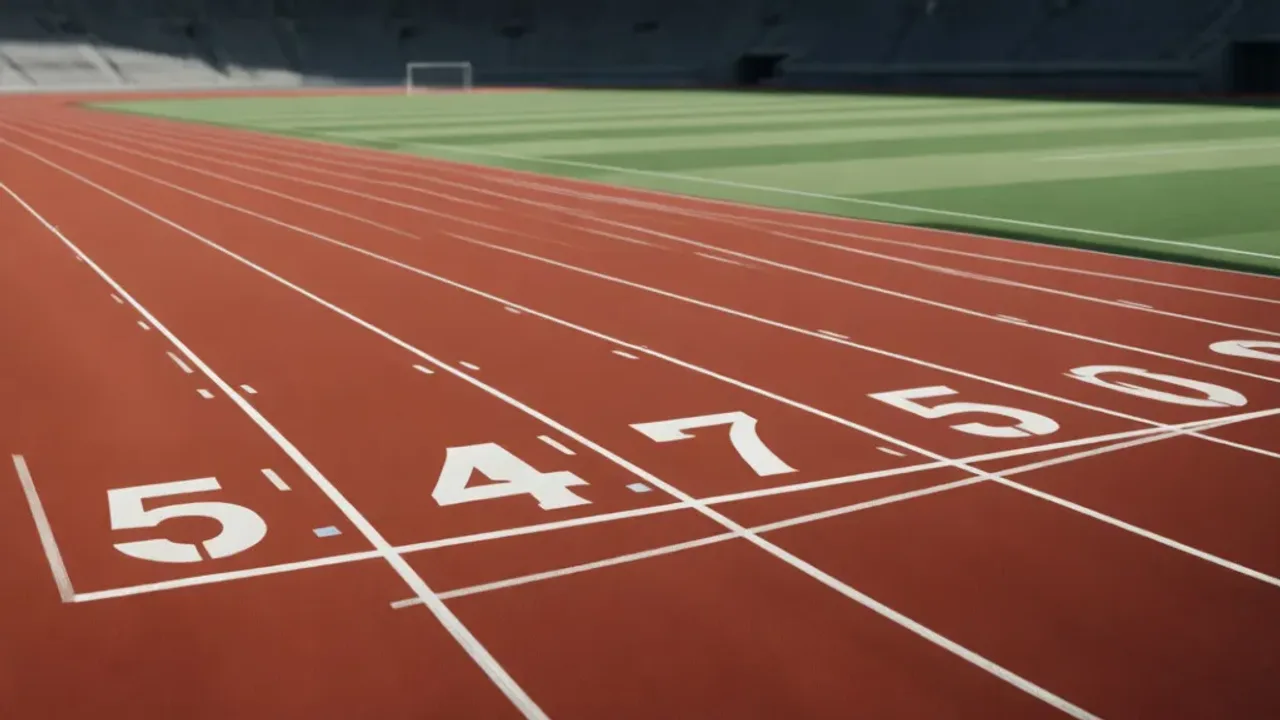
The scale of 100 meters is significant. It is a distance that is long enough to require a few seconds of travel, yet short enough to be easily observed in its entirety. Consider a standard track. A single straightaway often spans this distance. It provides a perfect frame of reference for speed and human performance.
Scientific Standardization
The precision of the meter is not arbitrary. It is defined by the distance light travels in a vacuum during a time interval of 1/299,792,458 of a second. This scientific definition ensures that every measurement of 100 meters, regardless of where it is taken, remains identical. This consistency is the backbone of modern engineering and global trade.
Before this standard was adopted, measurements were often tied to physical objects that could wear down or change over time. By shifting to a constant of nature, researchers eliminated human error. This change makes modern construction and manufacturing incredibly accurate. It is a precise system.
Practical Applications of the Distance
The application of this distance spans many industries. In athletics, the 100-meter dash is the most iconic sprint event. It tests explosive power and acceleration. Athletes train for years to shave milliseconds off their time over this specific length.
Beyond the track, the distance is used in construction and environmental planning. When developers lay out a site, they often use 100-meter increments to manage space. It helps in allocating land for buildings, parking, and green space. It is a versatile unit.
- Athletics: Used to measure the premier sprint event on a track.
- Engineering: Acts as a standard for measuring medium-scale infrastructure.
- Construction: Helps in the planning of site layouts and property lines.
- Navigation: Used in some contexts to define short-range visibility.
When measuring this distance in a practical setting, consider these steps to ensure accuracy:
- Verify the start and end points using a calibrated measuring tape or digital tool.
- Ensure the measuring path is clear of debris or obstacles.
- Keep the measuring line taut to prevent sagging, which can add extra length.
- Account for any significant elevation changes, as slopes change the horizontal distance.
Comparing 100 Meters to Common Landmarks
Many people struggle to visualize 100 meters without a physical comparison. Think of a standard American football field. It is 100 yards long, which is about 91.44 meters. Thus, 100 meters is roughly 8.5 meters longer than the length of a football field. This small difference is often overlooked, but it is important for precise planning.
Another way to think about it is through walking speed. At a brisk walk, most people cover 100 meters in about a minute. If you are walking slowly, it might take closer to 90 seconds. This simple time-based metric is a great way to estimate the distance without a tape measure.
Frequently Asked Questions
How many yards are in 100 meters?
One hundred meters is equal to 109.36 yards. This conversion is frequently used to compare metric track distances with imperial measurements used in American sports.
Is 100 meters the same as an American football field?
A standard American football field is 100 yards long, which is approximately 91.44 meters. Therefore, 100 meters is slightly longer than the length of a typical football field.
How long does it take to walk 100 meters?
An average person walking at a moderate pace will cover 100 meters in about 60 to 90 seconds. The actual time depends on individual stride length and walking speed.
Why is the meter defined by light speed?
Defining the meter by the distance light travels in a vacuum ensures a constant and universal standard. This method eliminates the need for physical artifacts that could deteriorate over time.
Is 100 meters a significant distance in daily life?
Yes, it is often used as a standard reference for short distances in urban planning and training. It provides a manageable unit for estimating space without needing specialized equipment.
What is the most common use for this distance?
The most recognizable use is the 100-meter sprint in track and field competitions. It is an industry standard for testing athletic capability globally.
Final Considerations
Understanding how big is 100 meters helps simplify spatial planning and athletic performance tracking. By remembering that 100 meters is 328.08 feet, you have a reliable conversion factor for almost any situation. Whether you are on a track or a construction site, this distance is a pillar of precise measurement.
Always verify your measurements with a calibrated tool when precision is required for professional tasks. Relying on estimates is fine for casual observation, but accuracy requires standard equipment. Keep these conversions in mind for your next project.
Share: