6 kilometers is equal to 3.72823 miles. Many individuals seeking the conversion for 6 km to miles require this data for athletic training, travel planning, or general navigation purposes. Understanding how to bridge the gap between the metric system and the imperial system of measurement is a practical skill for both travelers and students alike.
ConvertersOctober 19, 2026
6 Kilometers to Miles: 6 km Equals 3.72823 Miles
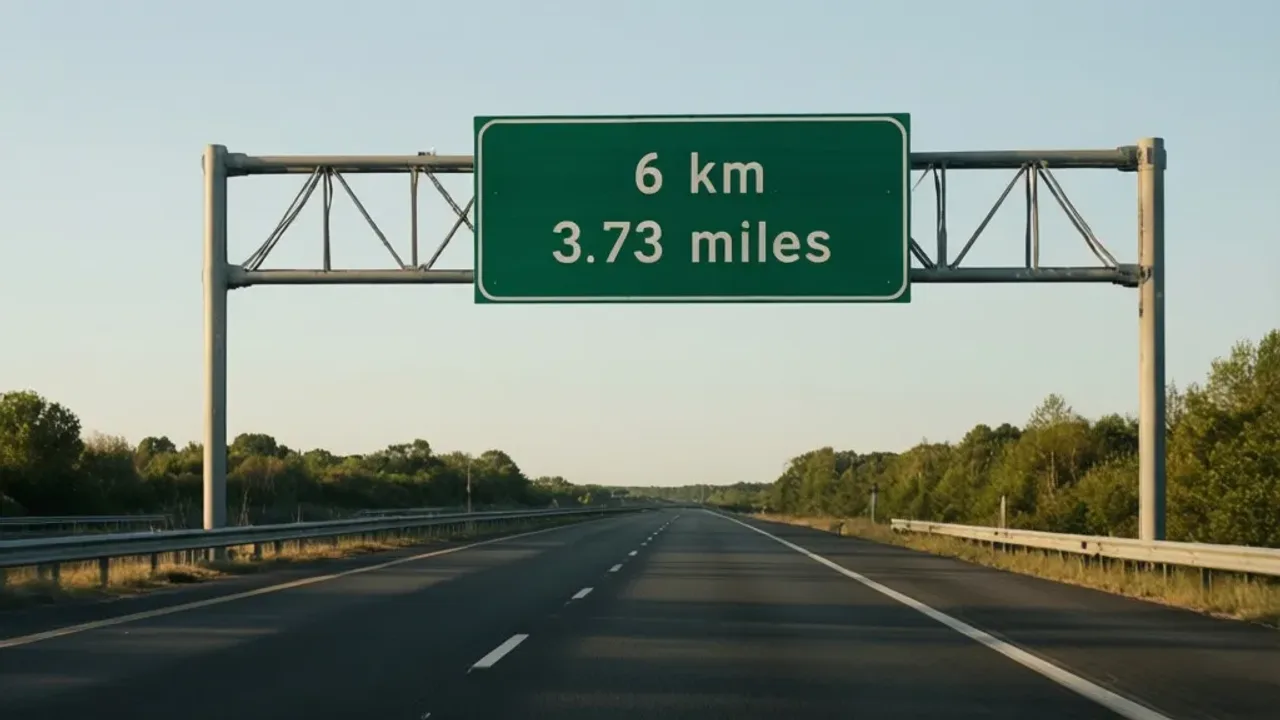 AI-generated image
Key Takeaways:
- A distance of 6 kilometers converts precisely to 3.72823 miles.
- The standard conversion factor for this calculation is 0.621371.
- You can quickly estimate the value by multiplying the kilometer distance by 0.62.
- Consistent use of the conversion factor ensures accuracy across all calculations.
Conversion Formula and Methodology
To convert kilometers to miles, the distance in kilometers is multiplied by the conversion factor of 0.621371. This constant represents the number of miles in one single kilometer. By applying this ratio to 6 kilometers, the result is calculated as 6 multiplied by 0.621371, yielding 3.72823 miles. Understanding the math behind 6 km to miles allows one to perform similar conversions for any metric distance independently. It is straightforward.
When performing these calculations, keep these points in mind to ensure the best results:
- Ensure you use the precise multiplier to maintain mathematical accuracy.
- Round your final answer based on the requirements of your specific project or task.
- Verify the units before proceeding to avoid any errors in distance estimation.
| Kilometers (km) | Miles (mi) |
|---|---|
| 1 km | 0.621371 mi |
| 3 km | 1.86411 mi |
| 5 km | 3.10686 mi |
| 6 km | 3.72823 mi |
| 10 km | 6.21371 mi |
Practical Application
Understanding this conversion is useful for interpreting distance measurements in regions that use different systems of measurement. It allows for a quick comparison between international standards and local conventions when planning travel or evaluating physical distances. By mastering the 6 km to miles conversion, one gains a better perspective on distance regardless of the measurement system being used. It is efficient.
- Identify the total distance in kilometers.
- Apply the 0.621371 multiplier to the total distance.
- Confirm the result for your documentation or planning needs.
Frequently Asked Questions
How can I convert kilometers to miles manually?
You can manually convert kilometers to miles by multiplying the kilometer value by 0.621371. Using this decimal factor provides an accurate result for most general distance calculations.
Is the conversion factor for kilometers to miles always the same?
Yes, the conversion factor remains constant as it is based on the defined length of a kilometer and a mile. One kilometer is internationally recognized as being equivalent to approximately 0.621371 miles.
Why is 6 kilometers often converted to miles?
This specific conversion is frequently requested because 5 kilometers and 6 kilometers are common distances for athletic events and walking routes. Converting these values helps individuals accustomed to the mile system understand the length of these courses.
Should I round the result to 3.73 miles?
Rounding to 3.73 miles is acceptable for general estimates or casual conversation. However, for precise scientific or engineering purposes, it is better to maintain more decimal places.
Does the metric system use the same meter everywhere?
Yes, the meter is an international standard unit of length. Regardless of the region, the relationship between the kilometer and the mile remains consistent based on defined mathematical constants.
To convert kilometers to miles, simply multiply the number of kilometers by the factor of 0.621371. Keeping this conversion constant in mind ensures that you can always determine the correct distance for your specific needs.
Share: