Ten centimeters is equal to 0.1 meters, which translates to approximately 3.94 inches. Understanding how long is 10 cm assists in various tasks ranging from technical drafting to everyday household measurements. While it may seem like a simple unit of length, mastering the relationship between centimeters, millimeters, and inches provides a stronger foundation for accurate measurement in both professional and personal projects.
MeasurementsNovember 16, 2026
How Long Is 10 cm? Metric Conversions and Visual Examples
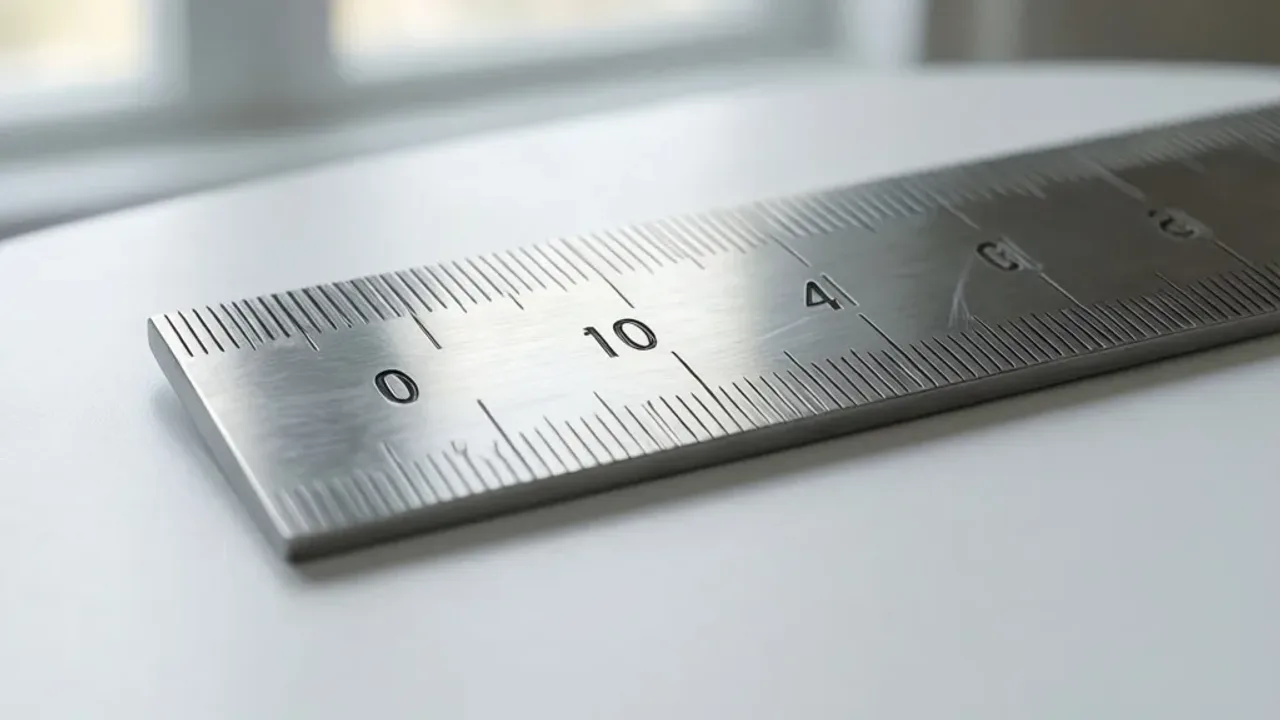 AI-generated image
Key Takeaways:
- A length of 10 centimeters is equivalent to exactly 100 millimeters.
- You can estimate 10 centimeters by using the width of a standard credit card plus an additional 1.5 centimeters.
- Converting this measurement to inches yields approximately 3.937 inches.
- Understanding metric base units is helpful for quick conversions.
Visualizing 10 Centimeters in Daily Life
Visualizing small metric measurements is easier when relating them to common household items. Since 10 centimeters is a tenth of a meter, it serves as a baseline for small-scale projects. When considering how long is 10 cm, one can observe that it fits within the palm of a hand. It is a frequent dimension in product design.
Hardware often uses this scale. Many standard screws, bolts, and electronic components are measured in increments of 10 millimeters or 1 centimeter. By recognizing the 10-centimeter mark, you can quickly assess the size of small objects without needing an immediate tool. This skill is particularly useful in DIY projects, where quick estimations can save time and prevent material waste.
Consider the following objects to help visualize the length:
- A standard credit card width is approximately 8.5 centimeters.
- Adding 1.5 centimeters to that width reaches the 10-centimeter mark.
- Many smartphone widths are close to this measurement.
- A standard ballpoint pen is often about 14 centimeters long, meaning 10 centimeters is roughly two-thirds of the pen's length.
| Unit | Value for 10 cm |
|---|---|
| Millimeters | 100 mm |
| Meters | 0.1 m |
| Inches | 3.937 in |
| Feet | 0.328 ft |
The Science of Metric Measurement
The metric system is a decimal-based system of measurement. It is widely used across the globe for scientific and commercial purposes. At the heart of this system is the meter. The centimeter is effectively one-hundredth of that base unit. Because the entire system relies on powers of ten, conversions between centimeters and other metric units are straightforward.
For example, if you need to convert centimeters to millimeters, you simply multiply by ten. Conversely, to find meters, you divide by one hundred. This logical structure eliminates the complexity found in some imperial units. It makes engineering and construction more consistent. Global standards ensure that a 10-centimeter object in one country is identical to one in another.
Practical Applications and Measurement Tips
Precision is often necessary for accuracy. Follow these steps to ensure your measurements remain consistent when dealing with 10-centimeter lengths. Consistency is the key to quality in any assembly or design task.
- Use a calibrated ruler to verify the exact 100-millimeter distance.
- If a ruler is unavailable, utilize a credit card as a reliable reference object.
- Ensure your measuring tool starts exactly at the zero mark to avoid errors.
- Check your angle of vision; looking at the ruler from an angle can create a parallax error.
- Always verify your measurement twice for critical projects.
When measuring, it is also important to consider the thickness of the material. If you are measuring a box, include the wall thickness. Small margins of error can accumulate over longer distances. Staying consistent with your measurement points ensures that everything fits together correctly. It is a simple habit that yields professional results.
Understanding Conversion Factors
Transitioning between different systems of measurement can be challenging. Many people in the United States are accustomed to inches. However, the metric system is increasingly common in technical fields. Knowing how to convert 10 centimeters into inches is a practical skill.
One inch is defined as exactly 2.54 centimeters. By dividing 10 by 2.54, we arrive at approximately 3.937 inches. This figure is essential for anyone working with international blueprints or imported hardware. Keep this conversion factor in mind for quick mental math.
Common Mistakes to Avoid
One of the most common errors involves starting a measurement at the "1" mark on a ruler instead of the "0" mark. This mistake adds an extra centimeter to the length, which is significant in small-scale work. Always inspect your starting point.
Another error is confusing millimeters with centimeters. A measurement of 10 millimeters is only 1 centimeter. It is ten times smaller than the desired 10-centimeter length. Always double-check your units before cutting or purchasing materials. A simple label on your project notes can prevent this confusion.
Frequently Asked Questions
How many inches are in 10 cm?
There are approximately 3.94 inches in 10 centimeters. This conversion is useful when transitioning between metric and imperial measurement systems.
Is 10 cm the same as 100 mm?
Yes, 10 centimeters is exactly equal to 100 millimeters. A simple multiplication by 10 provides the correct conversion.
How does 10 cm compare to a meter?
A length of 10 centimeters represents exactly one-tenth of a meter. It takes 10 segments of 10 centimeters to equal 1 meter.
What is the most accurate way to measure 10 cm?
The most accurate way to measure this length is by using a standard metric ruler. These tools provide clear markings to ensure precision.
Does temperature affect the length of 10 cm?
Materials can expand with temperature changes. However, the standard definition of 10 centimeters remains constant. It is very stable for most applications.
Can I use a phone app to measure 10 cm?
Many modern smartphones have augmented reality apps that can estimate lengths. While these are convenient, they may not be as accurate as a physical ruler for precise work.
To determine exactly how long is 10 cm, remember that it equals 100 millimeters or 0.1 meters. Using a standard metric ruler remains the most reliable method for maintaining accuracy in your measurements.
Share: