Fifty meters is a length equal to 164.04 feet or approximately 54.68 yards. When individuals ask how long is 50 meters, they typically seek a reliable conversion to verify distances for sports, construction, or general scientific reference.
MeasurementsOctober 20, 2026
How Long Is 50 Meters? 164.04 Feet Explained
 AI-generated image
Key Takeaways:
- Fifty meters is equivalent to 164.04 feet or 54.68 yards.
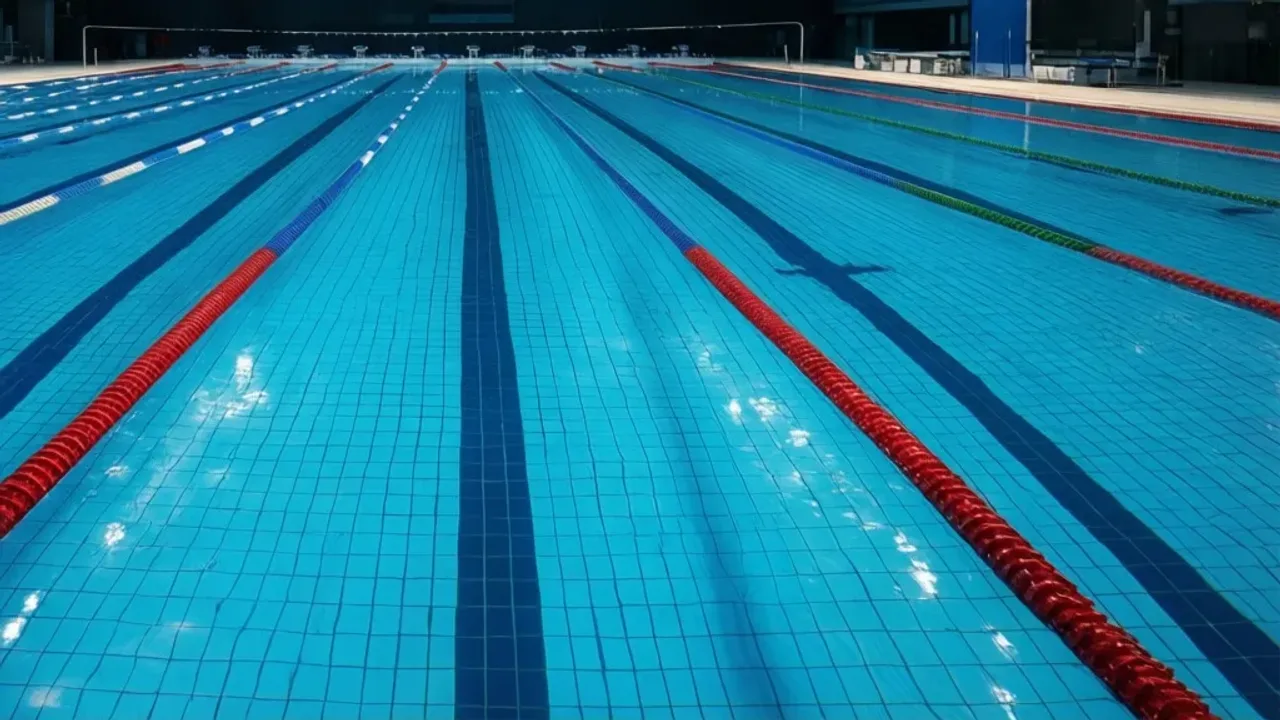
- This distance serves as the standard length for long-course swimming competitions.
- You convert meters to centimeters by multiplying the value by 100.
- The meter is defined by the distance light travels in a vacuum.
Visualizing 50 Meters
[obraz_1]
Understanding how long is 50 meters becomes significantly easier when looking at standard conversions. Whether you are planning a project or simply curious about physical dimensions, knowing how this length translates into other units is useful. The following table provides a comprehensive breakdown of how this length translates into various systems of measurement.
| Unit of Measurement | Equivalent Value |
|---|---|
| Feet | 164.04 ft |
| Yards | 54.68 yd |
| Inches | 1,968.50 in |
| Centimeters | 5,000 cm |
| Millimeters | 50,000 mm |
| Kilometers | 0.05 km |
| Miles | 0.031 miles |
The Scientific Definition of a Meter
The meter is the fundamental unit of length in the International System of Units (SI). It is not merely an arbitrary number. Since 1983, the meter has been defined by the distance that light travels in a vacuum during a time interval of 1/299,792,458 of a second. This definition ensures that measurements remain consistent across the globe, regardless of the tools used to measure them.
This scientific rigor is why 50 meters remains a constant, precise distance. It is not subject to the variations that might occur with physical prototypes. By relying on universal physical constants, scientists and engineers can ensure that a 50-meter track in one part of the world is identical to a 50-meter track in another.
Practical Applications and Standards
A 50-meter distance serves as a vital benchmark for physical space. Keep these points in mind regarding its utility in various sectors:
- Athletics: Training programs often utilize this distance for high-intensity sprint repetitions to build explosive power.
- Construction: Building sites frequently verify property boundaries and structural dimensions using this metric to ensure compliance with architectural plans.
- Aquatics: Swimming facilities use this specific length to define the Olympic-size pool standard, which is essential for international competition.
- Surveying: Land surveyors rely on precise 50-meter intervals to map out terrain and establish elevation changes over larger plots of land.
Precision is vital. Accuracy matters.
Best Practices for Measuring Distances
When you need to measure a distance of 50 meters, relying on estimated steps or casual observation is rarely sufficient. Follow these steps to ensure professional-grade accuracy:
- Use a calibrated measuring tool, such as a professional surveyor's tape or a digital laser distance measurer.
- Ensure the measuring path is completely clear of obstacles to maintain a perfectly straight line.
- Verify both the starting point and the ending point twice to avoid cumulative errors.
- If using a tape, keep it under constant tension to avoid sagging, which can add inaccurate inches to your measurement.
Comparison of Long-Course and Short-Course Distances
In the world of competitive swimming, the distinction between 50-meter pools and 25-meter pools is significant. A 50-meter pool, often referred to as "long course," requires a different level of endurance compared to the "short course" 25-meter pools. Swimmers must manage their energy differently over the longer 50-meter stretch, as there are fewer opportunities for turns and underwater gliding.
The 50-meter length is the gold standard for Olympic competition. It creates a level playing field where consistency is key. Understanding how long is 50 meters is therefore not just a matter of math, but a matter of athletic performance and standardized competition.
Frequently Asked Questions
How many yards are in 50 meters?
There are approximately 54.68 yards in 50 meters. This conversion is particularly helpful for those who are more accustomed to American sports fields or track distances measured in yards.
Is 50 meters a long distance?
In the context of sprinting, 50 meters is considered a short, high-intensity distance. However, in the context of a swimming pool, it represents the full length of a long-course facility, which is a significant distance for endurance athletes.
How many centimeters make up 50 meters?
Fifty meters is equal to exactly 5,000 centimeters. Because there are 100 centimeters in every meter, you simply multiply the length by 100 to arrive at the correct figure.
What defines the length of a meter?
The meter is the base unit of length in the International System of Units. It is scientifically determined by the distance light travels in a vacuum during a specific, defined time interval.
Are there different standards for a 50-meter pool?
Yes, a 50-meter pool is the standard for international competitive swimming. These facilities are designed to maintain this exact length to ensure that official times are comparable across all participating venues worldwide.
Why do we use the metric system for this distance?
The metric system is used because it provides a base-10 structure, which makes conversions between millimeters, centimeters, and meters much simpler than using imperial units. It is the global standard for scientific communication.
Conclusion
When researching how long is 50 meters, remember that it equals 164.04 feet. Always utilize a calibrated tool to maintain accuracy when measuring this distance in a practical setting.
Share: