A standard US nickel weighs exactly 5 grams. This consistent mass makes the coin a reliable reference tool for anyone checking what weighs 5 grams or needing to verify the accuracy of a small digital scale. Understanding the weight of everyday items is a practical skill for home kitchens, hobbyists, and those who require precise measurements without immediate access to laboratory-grade weights.
MeasurementsOctober 31, 2026
What Weighs 5 Grams? Common Objects That Weigh 5 Grams
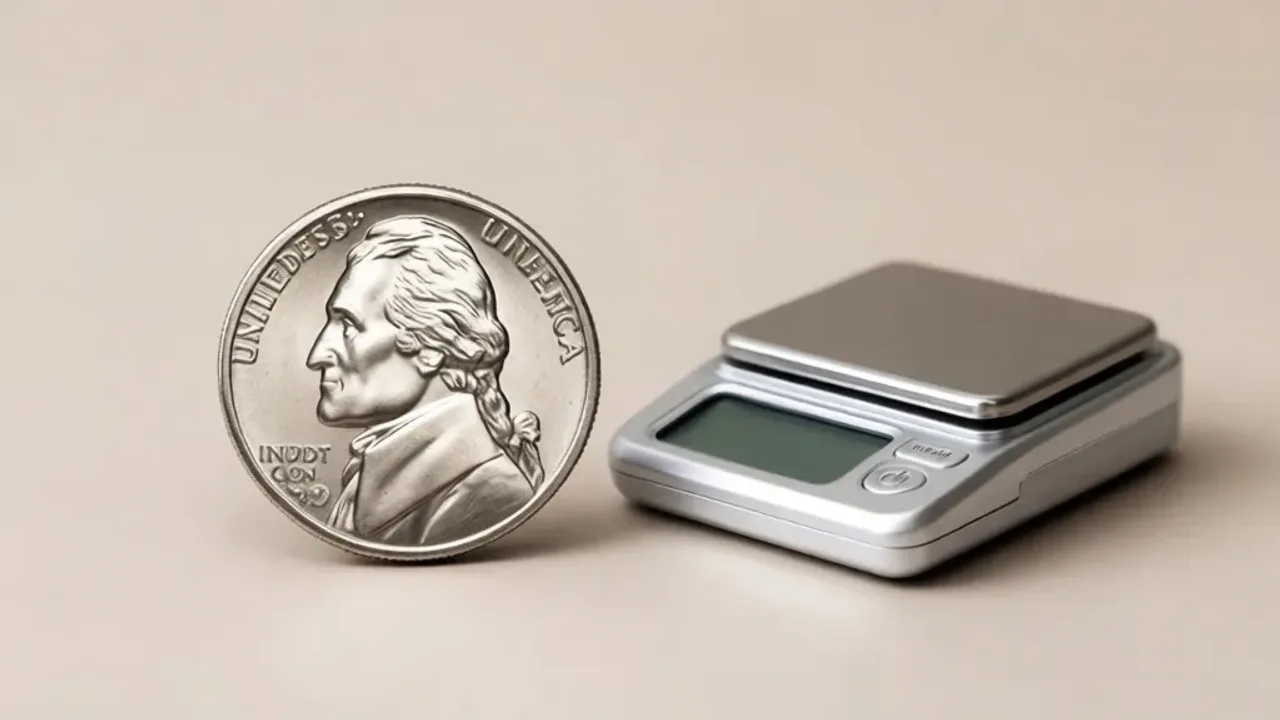 AI-generated image
Key Takeaways:
- A standard US nickel has an official mass of 5 grams.
- Common household items like a teaspoon of sugar weigh about 5 grams.
- Nickels are useful for calibrating small digital scales.
- Clean, dry items provide the most accurate results for reference.
Understanding the 5-Gram Standard
In the world of weights and measures, having a reliable reference point is essential. Whether you are measuring ingredients for a recipe or checking the calibration of a pocket scale, knowing the mass of common items provides immediate utility. The US nickel is perhaps the most accessible 5-gram reference tool available to the general public. It is regulated by federal standards to ensure that every coin minted meets specific weight requirements.
When you need to confirm if a scale is functioning correctly, the nickel acts as a "calibration weight." Because its weight is fixed, any deviation shown on your scale indicates that the device might need recalibration or that the surface it sits on is not level. It is a simple, effective process. Many people rely on this method because nickels are easy to obtain and require no special handling.
However, it is important to consider the condition of the coin. A heavily worn or damaged nickel may weigh slightly less than the standard 5 grams. For the most accurate results, use a coin that appears relatively new and clean. Dirt, grime, or tape residue on the surface will add unnecessary mass and skew your reading.
Common Items That Weigh 5 Grams
Beyond currency, several everyday objects align with the 5-gram standard. Knowing these items helps when you lack professional calibration tools. It is quite simple to find these items in a standard household environment.
- US nickel
- Teaspoon of granulated sugar
- Teaspoon of table salt
- Single sheet of standard A4 paper (under specific humidity conditions)
- One standard house key (varies by design)
| Item Category | Item Name | Typical Weight |
|---|---|---|
| Currency | US Nickel | 5g |
| Kitchen Staple | Teaspoon of Sugar | 5g |
| Kitchen Staple | Teaspoon of Salt | 5g |
| Stationery | A4 Paper Sheet | 5g |
The Importance of Calibration
Precision is key when measuring small amounts. Whether you are dealing with baking ingredients or hobby supplies, a scale that is off by even a fraction of a gram can lead to frustration. Calibration ensures that the internal sensors of your digital device are correctly aligned with the gravitational pull and the unit of measure you have selected.
To ensure accuracy during calibration, follow these steps. Precision is key.
- Place the scale on a flat, stable surface.
- Ensure the environment is free from strong drafts or vibrations.
- Turn the scale on and wait for the display to stabilize.
- Use the "tare" function to zero the scale before testing.
- Place your 5-gram reference item gently in the center of the platform.
- Observe the reading to confirm the weight matches the expectation.
If the scale displays a value other than 5.0 grams, consult the manufacturer’s manual for recalibration instructions. Most digital scales have a built-in mode for calibration that requires a specific weight, but a known 5-gram item can act as a secondary check to confirm the device is working as intended.
Variables That Affect Weight
While the US nickel is a stable weight, other items are not always consistent. Moisture is a major factor. For example, sugar and salt are hygroscopic, meaning they absorb moisture from the air. In a humid environment, a teaspoon of sugar might weigh slightly more than 5 grams due to the water it has absorbed.
Similarly, paper is highly sensitive to humidity. A sheet of A4 paper might weigh exactly 5 grams in a dry room but gain mass in a humid climate. This is why currency remains the gold standard for home calibration. Metal does not absorb environmental moisture the way organic materials do, keeping the mass consistent over time.
Another factor to consider is the design of the object. While we often say a "teaspoon" weighs 5 grams, this assumes a level, not a heaping, teaspoon. The density of the substance also matters. A teaspoon of flour will weigh significantly less than a teaspoon of salt because flour is less dense. Always level your measuring spoon to ensure consistency.
Frequently Asked Questions
Can I use a nickel to calibrate my scale?
Yes. A US nickel is set at 5 grams. Checking this value helps confirm if your scale needs recalibration or if it is reading accurately.
Do all teaspoons weigh the same?
Not always. Weight depends on density. Sugar and salt usually weigh about 5 grams, but packing density changes this. A level teaspoon is essential for accuracy.
Why is 5 grams a common reference weight?
It is easy to replicate. Many household items match this weight. It simplifies measuring at home without expensive equipment.
Are there factors that change the weight of these items?
Yes. Moisture content affects paper and food. A US nickel remains stable, unlike organic materials, which fluctuate with humidity.
What if my nickel does not weigh 5 grams?
If your scale shows a different weight, ensure the scale is on a flat surface. If it still reads incorrectly, your scale may require a professional calibration process or the coin might be damaged.
Practical Tips for Accurate Weighing
When you are working with small weights, small errors can compound. If you are weighing out multiple 5-gram portions, check your scale frequently. Temperature fluctuations can also affect sensitive electronic sensors. If you have just moved your scale from a cold garage to a warm kitchen, give it a few minutes to acclimate to the ambient temperature before attempting to weigh anything.
Furthermore, always keep your scale clean. Debris on the weighing platform can interfere with the sensor accuracy. Use a soft, dry cloth to wipe the surface after every use. Never use harsh chemicals or abrasive sponges, as these can scratch the surface or damage the delicate electronics inside the housing.
Consistency is the secret to success. By using the same reference weight, such as a specific nickel you have verified, you create a baseline for your measurements. This allows you to track the performance of your equipment over months or even years. When you know your baseline, you know when your equipment is failing or simply needs a bit of care.
The US nickel is the most reliable reference for those asking what weighs 5 grams. Always use clean, dry items for the best results.
Share: